Plumbing With Integrity

Plumbing With Integrity

Greater San Antonio Slab Leak Plumbers

Slab Leak Detection & Repair in San Antonio, TX

A slab leak can involve a pressurized freshwater line or a sewer and drain line beneath your foundation. The Bearded Plumber diagnoses both types and explains the repair options that fit your plumbing system and property.

Not sure which kind of leak you have? You do not need to diagnose it before calling. We can begin by identifying the affected plumbing system.

Start with the plumbing system

Two Types of Leaks Can Develop Beneath a Slab

The symptoms, testing methods, and repair choices can differ. We separate the two paths so we can investigate the problem without assuming every under-slab leak is the same.

Freshwater Supply-Line Slab Leaks

These leaks occur in pressurized hot- or cold-water piping beneath or within the foundation. Water may continue escaping even when no fixture is being used.

Possible warning signs:

  • Unexplained increases in water use
  • Running-water sounds when fixtures are off
  • Warm areas on a floor
  • Reduced water pressure
  • Damp flooring, baseboards, or foundation-area moisture
See freshwater diagnosis

Sewer and Drain-Line Slab Leaks

These leaks occur in gravity-flow waste piping below the foundation. Symptoms often appear when water is used in specific fixtures or a damaged section cannot carry wastewater as intended.

Possible warning signs:

  • Recurring drain backups
  • Persistent sewer odors
  • Multiple slow drains
  • Moisture near the foundation
  • A failed hydrostatic sewer test
See sewer diagnosis
Both Leak TypesFreshwater supply and sewer or drain lines
Diagnosis Through RepairOne connected plumbing process
Multiple Repair PathsOptions based on the findings
The Bearded Plumber service truck serving Greater San Antonio
A clear place to start

You Do Not Have to Diagnose It Yourself.

Slab leak symptoms can overlap with other plumbing problems. We begin by listening to what you have noticed, identifying the affected plumbing system, and choosing the testing that fits the situation.

Call promptly when you notice a pattern. Early diagnosis can help define the affected area and give you more time to compare practical repair options.

From concern to resolution

From Slab Leak Detection to Verified Repair

The recommended path depends on the plumbing system, pipe condition, location, accessibility, disruption, and long-term reliability.

01

Identify the System

Review the symptoms and determine whether the freshwater supply or sewer and drain system is the likely source.

02

Confirm the Leak

Use testing appropriate to that plumbing system instead of relying on symptoms alone.

03

Narrow the Location

Isolate the affected area and gather the information needed to plan access or rerouting.

04

Compare Repair Approaches

Consider pipe condition, location, access, disruption, and long-term reliability.

05

Complete the Plumbing Repair

Carry out the agreed localized repair, reroute, tunneling work, or broader replacement.

06

Retest and Verify

Test the repaired plumbing so the completed work can be evaluated before the project is closed.

Diagnosis before repair

How Slab Leak Detection Works

The first goal is to identify which plumbing system is involved, confirm that a leak exists, and narrow the affected area before recommending access or repair.

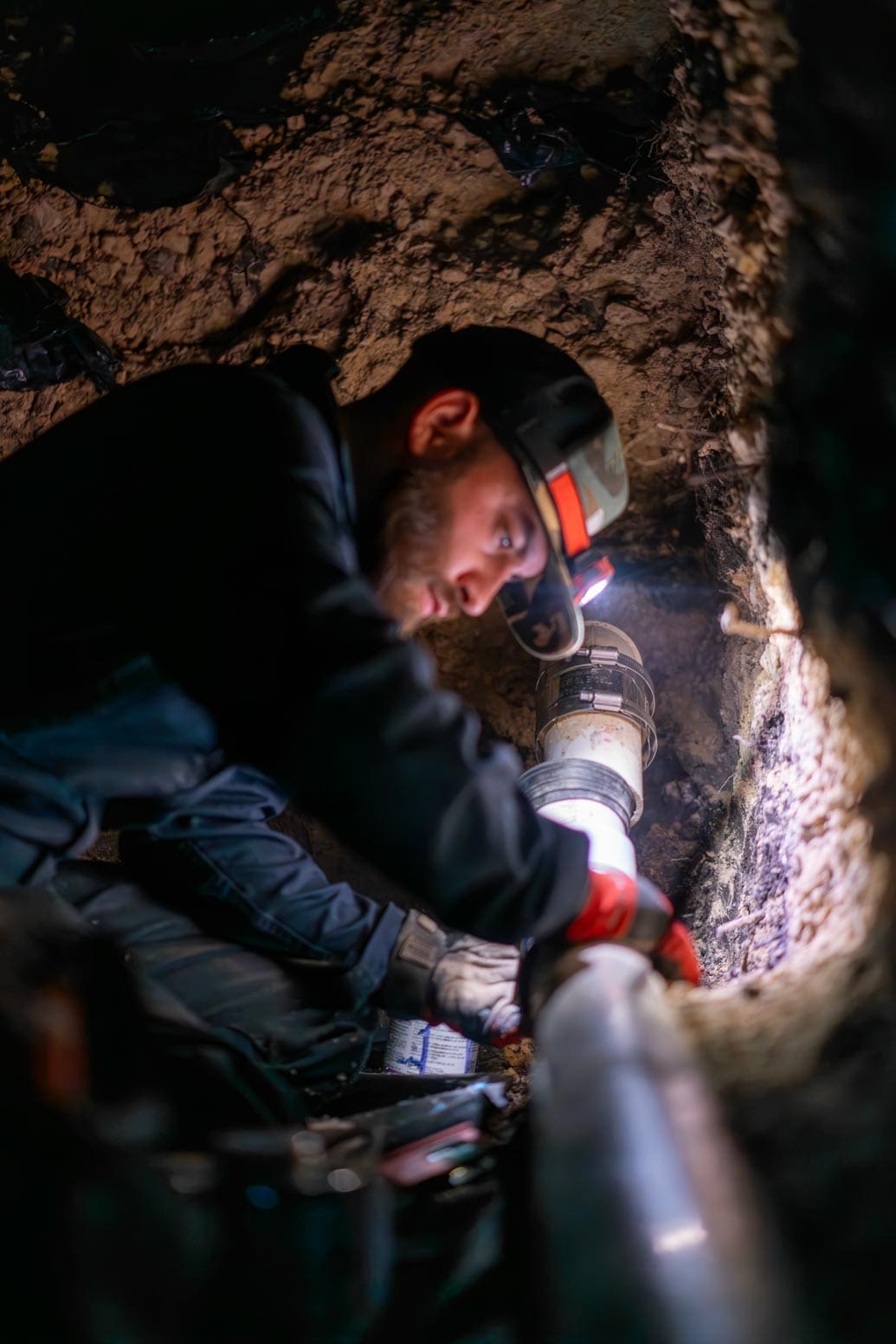
The Bearded Plumber technician inspecting plumbing beneath a foundation

Freshwater Leak Diagnosis

Freshwater investigations can use appropriate pressure, isolation, and location methods based on the home’s piping arrangement and symptoms. The objective is to distinguish a supply-line leak from fixture use or another source of moisture, then narrow the location enough to plan a repair.

Sewer Leak Diagnosis

A hydrostatic test can help confirm whether the sewer system holds water. When a failure is found, system isolation and sewer camera inspection and pinpointing may help narrow the affected branch and map an efficient repair route.

A camera does not prove every leak by itself. It is an inspection, navigation, and verification tool interpreted alongside testing and site conditions.

If the property does not have a usable access point, a mainline sewer cleanout installation may make testing and future service more practical.

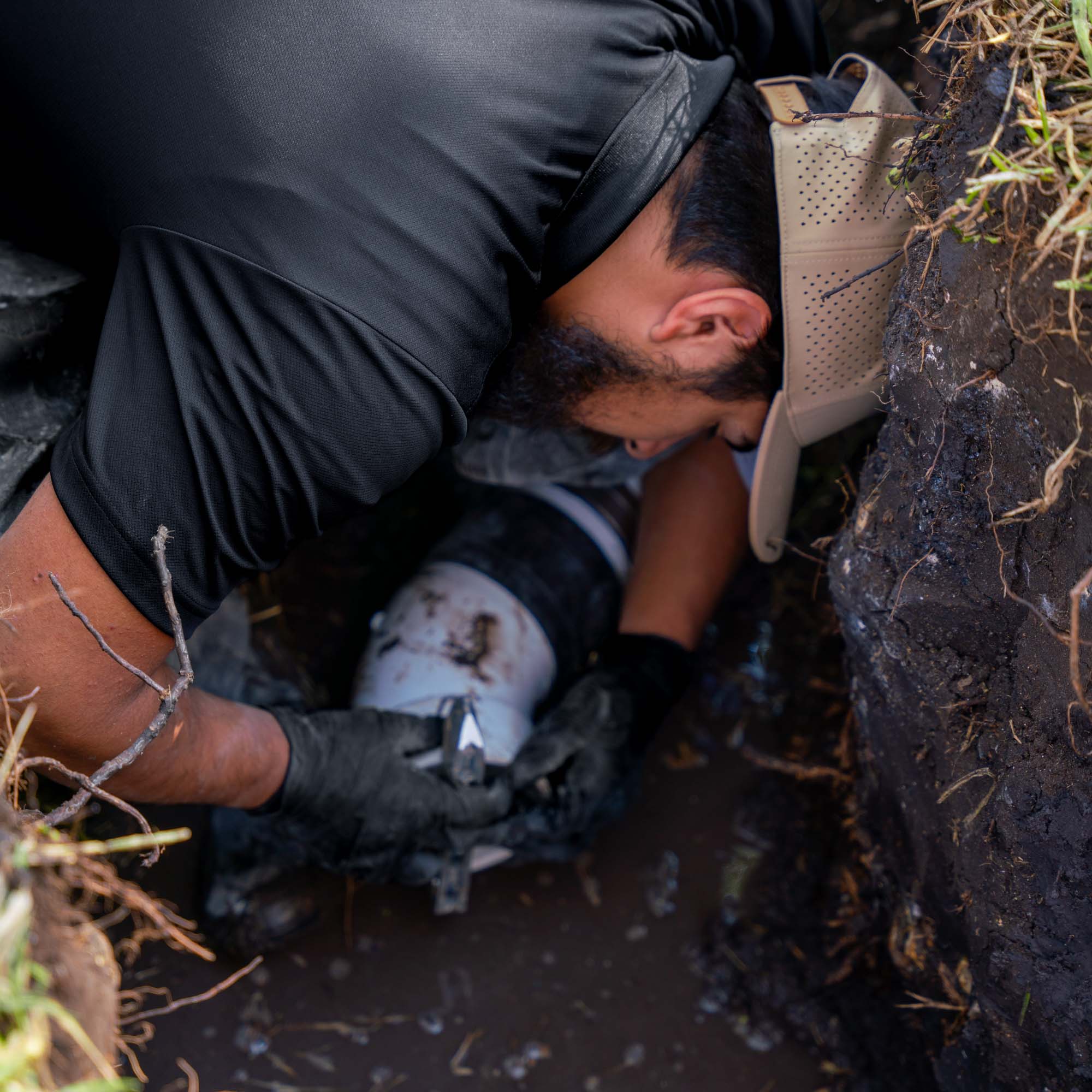
The Bearded Plumber technician working on an underground sewer line
Access for testing and maintenance

Mainline Sewer Cleanouts

A mainline sewer cleanout is a capped, accessible opening into the property’s main sewer line. When it is properly located, sized, and kept accessible, it gives a plumber a practical entry point for testing, inspection, cleaning, and future maintenance.

Important Access for Hydrostatic Testing

During many hydrostatic sewer tests, a usable cleanout provides controlled access for placing test equipment, isolating the system, and monitoring the test. The exact setup depends on the home’s piping and the area being tested, but good access can be critical to performing the test efficiently and avoiding unnecessary fixture removal.

More Direct Camera and Cleaning Access

A mainline cleanout can give sewer cameras, drain-cleaning cables, and other service equipment a more direct route into the main sewer line. This can help with locating blockages, inspecting pipe conditions, and servicing the system without relying on a less-direct opening.

Useful for Long-Term Sewer Maintenance

An accessible, secure cleanout can make future troubleshooting and maintenance more practical. If a property has no usable cleanout—or the existing access is damaged, buried, or poorly located—we can evaluate a mainline sewer cleanout installation.

Solutions based on the findings

Under-Slab Plumbing Repair Options

No single repair method is right for every property. The best approach depends on the failed pipe, the surrounding system, accessibility, and the balance between disruption and long-term performance.

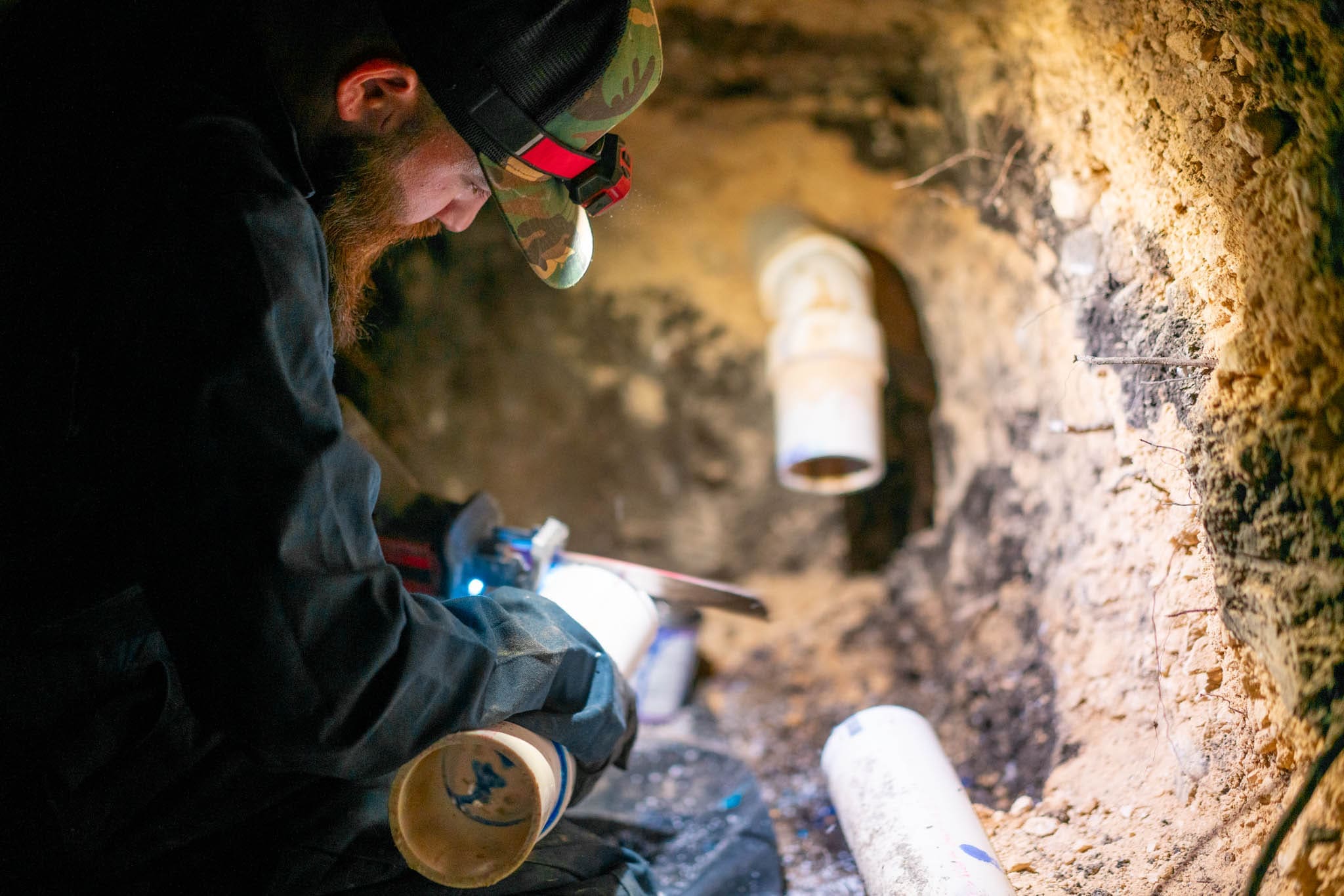
The Bearded Plumber technician working on pipe beneath a foundation

Localized or Direct Repair

Repair the damaged section when the location can be defined and the surrounding piping is otherwise a reasonable candidate for a focused repair.

Pipe Rerouting

Route new piping around the failed under-slab section when an alternate path offers a practical, serviceable solution.

Tunneling or Other Access

Create access to piping beneath the foundation when the repair needs to be completed at the original location and site conditions support that approach.

Repiping or Replacement

Replace a larger portion of the system when multiple failures, material condition, layout, or long-term reliability make a broader correction more appropriate. Learn more about our repiping services.

What Affects Slab Leak Repair Cost?

A dependable estimate requires more than confirming that a leak exists. Cost depends on the plumbing system, where the problem is located, how it can be accessed, and how much piping needs to be repaired or replaced.

Type of LeakFreshwater supply or sewer and drain piping
Location and DepthWhere the affected section sits beneath the property
Access MethodDirect access, rerouting, tunneling, or another approach
Repair ScopePipe condition, diagnostic work, restoration, and replacement needs
One connected plumbing process

Why Call The Bearded Plumber?

Slab leak work is easier to navigate when diagnosis and plumbing repair are treated as one connected process.

Both Leak Types

We evaluate freshwater supply and sewer or drain-line possibilities.

Multiple Repair Paths

We explain focused repair, rerouting, access, and replacement options based on the findings.

Verification Matters

Testing supports the diagnosis and helps evaluate completed plumbing work.

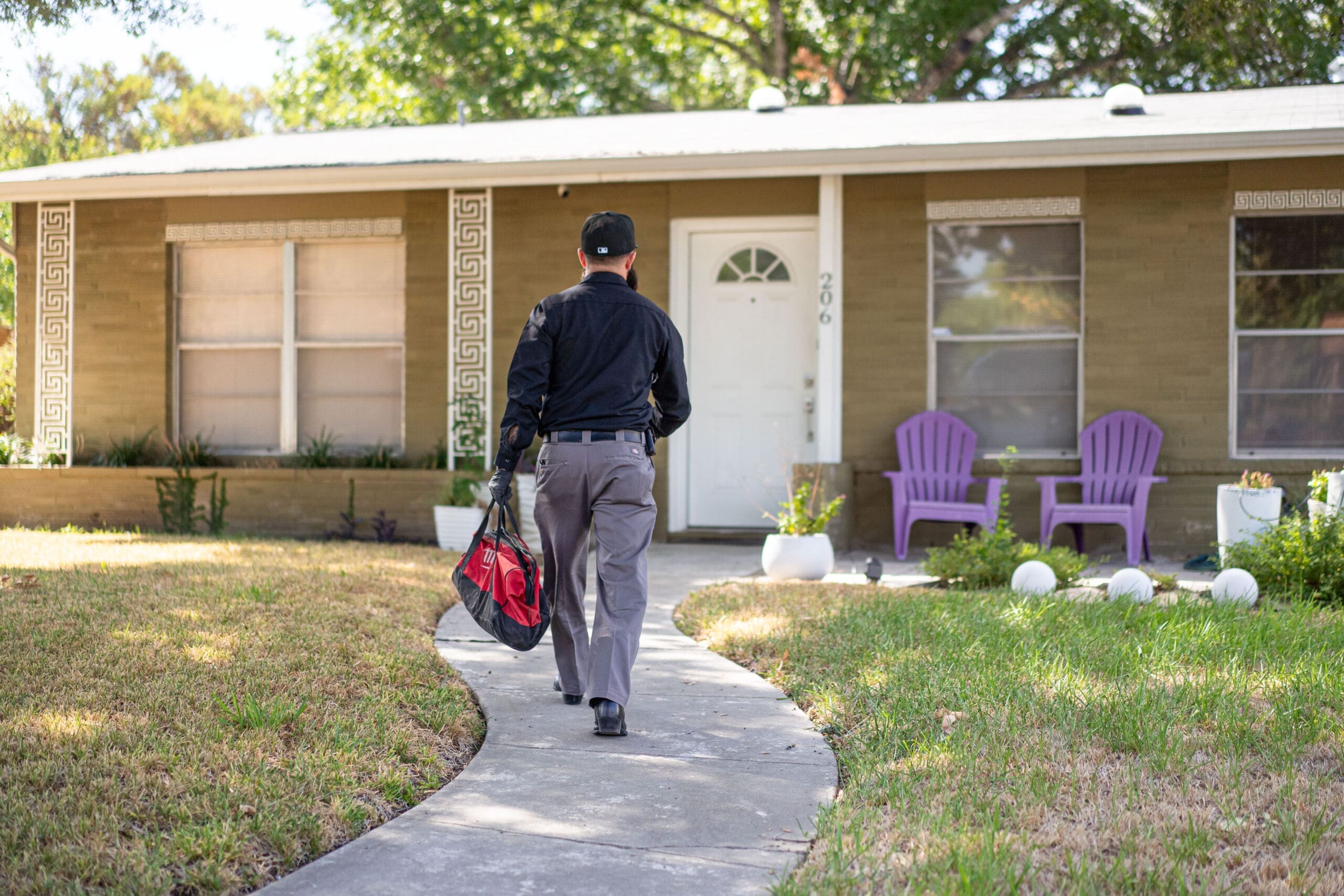
The Bearded Plumber technician arriving at a San Antonio home
Common homeowner questions

Slab Leak Repair FAQs

What is a slab leak?

A slab leak is a leak in plumbing located beneath or within a concrete foundation. It may involve a pressurized freshwater supply line or a sewer and drain line.

Can a slab leak involve freshwater or sewer pipes?

Yes. Both water-supply piping and sewer or drain piping can fail beneath a slab. The symptoms and testing process differ, so the first step is identifying which system is involved.

What are the most common warning signs?

Freshwater signs can include unexplained water use, running-water sounds, warm flooring, reduced pressure, or damp areas. Sewer signs can include recurring backups, odors, slow drains, foundation-area moisture, or a failed sewer test.

How do plumbers confirm a freshwater slab leak?

Plumbers use pressure, isolation, and location methods appropriate to the home’s supply system. The goal is to confirm that water is escaping and narrow the affected area before planning a repair.

What is a hydrostatic test?

A hydrostatic sewer test checks whether an isolated sewer system can hold a controlled water level. A drop can indicate a loss of integrity that requires further isolation and pinpointing.

Can a sewer camera find a leak by itself?

Not always. A camera can reveal pipe conditions and help navigate or map the sewer, but it does not independently prove every leak. It is most useful when interpreted with testing, isolation, and site conditions.

Does every slab leak require breaking through the floor?

No. Depending on the system, location, and pipe condition, a repair may use direct access, tunneling, rerouting, or a broader replacement approach. The findings should guide the method.

Can a pipe be rerouted instead?

In some properties, rerouting can bypass the failed under-slab section and provide a practical path for new piping. Feasibility depends on the plumbing layout, access, and long-term serviceability.

When is repiping or replacement recommended?

A broader replacement may be considered when multiple failures, pipe condition, material, system layout, or long-term reliability make repeated localized repairs less practical.

What affects slab leak repair cost?

Key factors include whether the leak is freshwater or sewer, its depth and location, diagnostic work, the access method, pipe condition, repair scope, and any restoration needs.

How long does diagnosis and repair take?

Timing varies with the type of leak, the testing required, accessibility, and the selected repair. Diagnosis is completed first so the scope and likely schedule can be explained for the specific property.

Should I call before I know what type of leak I have?

Yes. You do not need to determine the leak type yourself. Describe the symptoms you have noticed, and the evaluation can begin by identifying the affected plumbing system.


Let’s Find the Leak and Talk Through the Right Repair.

If you suspect a freshwater or sewer leak beneath your foundation, call The Bearded Plumber for slab leak detection and repair options across Greater San Antonio.

The Bearded Plumber service truck

Greater San Antonio Slab Leak Plumbers

Slab Leak Detection & Repair in San Antonio, TX

A slab leak can involve a pressurized freshwater line or a sewer and drain line beneath your foundation. The Bearded Plumber diagnoses both types and explains the repair options that fit your plumbing system and property.

Not sure which kind of leak you have? You do not need to diagnose it before calling. We can begin by identifying the affected plumbing system.

Start with the plumbing system

Two Types of Leaks Can Develop Beneath a Slab

The symptoms, testing methods, and repair choices can differ. We separate the two paths so we can investigate the problem without assuming every under-slab leak is the same.

Freshwater Supply-Line Slab Leaks

These leaks occur in pressurized hot- or cold-water piping beneath or within the foundation. Water may continue escaping even when no fixture is being used.

Possible warning signs:

  • Unexplained increases in water use
  • Running-water sounds when fixtures are off
  • Warm areas on a floor
  • Reduced water pressure
  • Damp flooring, baseboards, or foundation-area moisture
See freshwater diagnosis

Sewer and Drain-Line Slab Leaks

These leaks occur in gravity-flow waste piping below the foundation. Symptoms often appear when water is used in specific fixtures or a damaged section cannot carry wastewater as intended.

Possible warning signs:

  • Recurring drain backups
  • Persistent sewer odors
  • Multiple slow drains
  • Moisture near the foundation
  • A failed hydrostatic sewer test
See sewer diagnosis
Both Leak TypesFreshwater supply and sewer or drain lines
Diagnosis Through RepairOne connected plumbing process
Multiple Repair PathsOptions based on the findings
The Bearded Plumber service truck serving Greater San Antonio
A clear place to start

You Do Not Have to Diagnose It Yourself.

Slab leak symptoms can overlap with other plumbing problems. We begin by listening to what you have noticed, identifying the affected plumbing system, and choosing the testing that fits the situation.

Call promptly when you notice a pattern. Early diagnosis can help define the affected area and give you more time to compare practical repair options.

From concern to resolution

From Slab Leak Detection to Verified Repair

The recommended path depends on the plumbing system, pipe condition, location, accessibility, disruption, and long-term reliability.

01

Identify the System

Review the symptoms and determine whether the freshwater supply or sewer and drain system is the likely source.

02

Confirm the Leak

Use testing appropriate to that plumbing system instead of relying on symptoms alone.

03

Narrow the Location

Isolate the affected area and gather the information needed to plan access or rerouting.

04

Compare Repair Approaches

Consider pipe condition, location, access, disruption, and long-term reliability.

05

Complete the Plumbing Repair

Carry out the agreed localized repair, reroute, tunneling work, or broader replacement.

06

Retest and Verify

Test the repaired plumbing so the completed work can be evaluated before the project is closed.

Diagnosis before repair

How Slab Leak Detection Works

The first goal is to identify which plumbing system is involved, confirm that a leak exists, and narrow the affected area before recommending access or repair.

The Bearded Plumber technician inspecting plumbing beneath a foundation

Freshwater Leak Diagnosis

Freshwater investigations can use appropriate pressure, isolation, and location methods based on the home’s piping arrangement and symptoms. The objective is to distinguish a supply-line leak from fixture use or another source of moisture, then narrow the location enough to plan a repair.

Sewer Leak Diagnosis

A hydrostatic test can help confirm whether the sewer system holds water. When a failure is found, system isolation and sewer camera inspection and pinpointing may help narrow the affected branch and map an efficient repair route.

A camera does not prove every leak by itself. It is an inspection, navigation, and verification tool interpreted alongside testing and site conditions.

If the property does not have a usable access point, a mainline sewer cleanout installation may make testing and future service more practical.

The Bearded Plumber technician working on an underground sewer line
Access for testing and maintenance

Mainline Sewer Cleanouts

A mainline sewer cleanout is a capped, accessible opening into the property’s main sewer line. When it is properly located, sized, and kept accessible, it gives a plumber a practical entry point for testing, inspection, cleaning, and future maintenance.

Important Access for Hydrostatic Testing

During many hydrostatic sewer tests, a usable cleanout provides controlled access for placing test equipment, isolating the system, and monitoring the test. The exact setup depends on the home’s piping and the area being tested, but good access can be critical to performing the test efficiently and avoiding unnecessary fixture removal.

More Direct Camera and Cleaning Access

A mainline cleanout can give sewer cameras, drain-cleaning cables, and other service equipment a more direct route into the main sewer line. This can help with locating blockages, inspecting pipe conditions, and servicing the system without relying on a less-direct opening.

Useful for Long-Term Sewer Maintenance

An accessible, secure cleanout can make future troubleshooting and maintenance more practical. If a property has no usable cleanout—or the existing access is damaged, buried, or poorly located—we can evaluate a mainline sewer cleanout installation.

Solutions based on the findings

Under-Slab Plumbing Repair Options

No single repair method is right for every property. The best approach depends on the failed pipe, the surrounding system, accessibility, and the balance between disruption and long-term performance.

The Bearded Plumber technician working on pipe beneath a foundation

Localized or Direct Repair

Repair the damaged section when the location can be defined and the surrounding piping is otherwise a reasonable candidate for a focused repair.

Pipe Rerouting

Route new piping around the failed under-slab section when an alternate path offers a practical, serviceable solution.

Tunneling or Other Access

Create access to piping beneath the foundation when the repair needs to be completed at the original location and site conditions support that approach.

Repiping or Replacement

Replace a larger portion of the system when multiple failures, material condition, layout, or long-term reliability make a broader correction more appropriate. Learn more about our repiping services.

What Affects Slab Leak Repair Cost?

A dependable estimate requires more than confirming that a leak exists. Cost depends on the plumbing system, where the problem is located, how it can be accessed, and how much piping needs to be repaired or replaced.

Type of LeakFreshwater supply or sewer and drain piping
Location and DepthWhere the affected section sits beneath the property
Access MethodDirect access, rerouting, tunneling, or another approach
Repair ScopePipe condition, diagnostic work, restoration, and replacement needs
One connected plumbing process

Why Call The Bearded Plumber?

Slab leak work is easier to navigate when diagnosis and plumbing repair are treated as one connected process.

Both Leak Types

We evaluate freshwater supply and sewer or drain-line possibilities.

Multiple Repair Paths

We explain focused repair, rerouting, access, and replacement options based on the findings.

Verification Matters

Testing supports the diagnosis and helps evaluate completed plumbing work.

The Bearded Plumber technician completing under-slab plumbing work
Common homeowner questions

Slab Leak Repair FAQs

What is a slab leak?

A slab leak is a leak in plumbing located beneath or within a concrete foundation. It may involve a pressurized freshwater supply line or a sewer and drain line.

Can a slab leak involve freshwater or sewer pipes?

Yes. Both water-supply piping and sewer or drain piping can fail beneath a slab. The symptoms and testing process differ, so the first step is identifying which system is involved.

What are the most common warning signs?

Freshwater signs can include unexplained water use, running-water sounds, warm flooring, reduced pressure, or damp areas. Sewer signs can include recurring backups, odors, slow drains, foundation-area moisture, or a failed sewer test.

How do plumbers confirm a freshwater slab leak?

Plumbers use pressure, isolation, and location methods appropriate to the home’s supply system. The goal is to confirm that water is escaping and narrow the affected area before planning a repair.

What is a hydrostatic test?

A hydrostatic sewer test checks whether an isolated sewer system can hold a controlled water level. A drop can indicate a loss of integrity that requires further isolation and pinpointing.

Can a sewer camera find a leak by itself?

Not always. A camera can reveal pipe conditions and help navigate or map the sewer, but it does not independently prove every leak. It is most useful when interpreted with testing, isolation, and site conditions.

Does every slab leak require breaking through the floor?

No. Depending on the system, location, and pipe condition, a repair may use direct access, tunneling, rerouting, or a broader replacement approach. The findings should guide the method.

Can a pipe be rerouted instead?

In some properties, rerouting can bypass the failed under-slab section and provide a practical path for new piping. Feasibility depends on the plumbing layout, access, and long-term serviceability.

When is repiping or replacement recommended?

A broader replacement may be considered when multiple failures, pipe condition, material, system layout, or long-term reliability make repeated localized repairs less practical.

What affects slab leak repair cost?

Key factors include whether the leak is freshwater or sewer, its depth and location, diagnostic work, the access method, pipe condition, repair scope, and any restoration needs.

How long does diagnosis and repair take?

Timing varies with the type of leak, the testing required, accessibility, and the selected repair. Diagnosis is completed first so the scope and likely schedule can be explained for the specific property.

Should I call before I know what type of leak I have?

Yes. You do not need to determine the leak type yourself. Describe the symptoms you have noticed, and the evaluation can begin by identifying the affected plumbing system.

Let’s Find the Leak and Talk Through the Right Repair.

If you suspect a freshwater or sewer leak beneath your foundation, call The Bearded Plumber for slab leak detection and repair options across Greater San Antonio.

The Bearded Plumber service truck